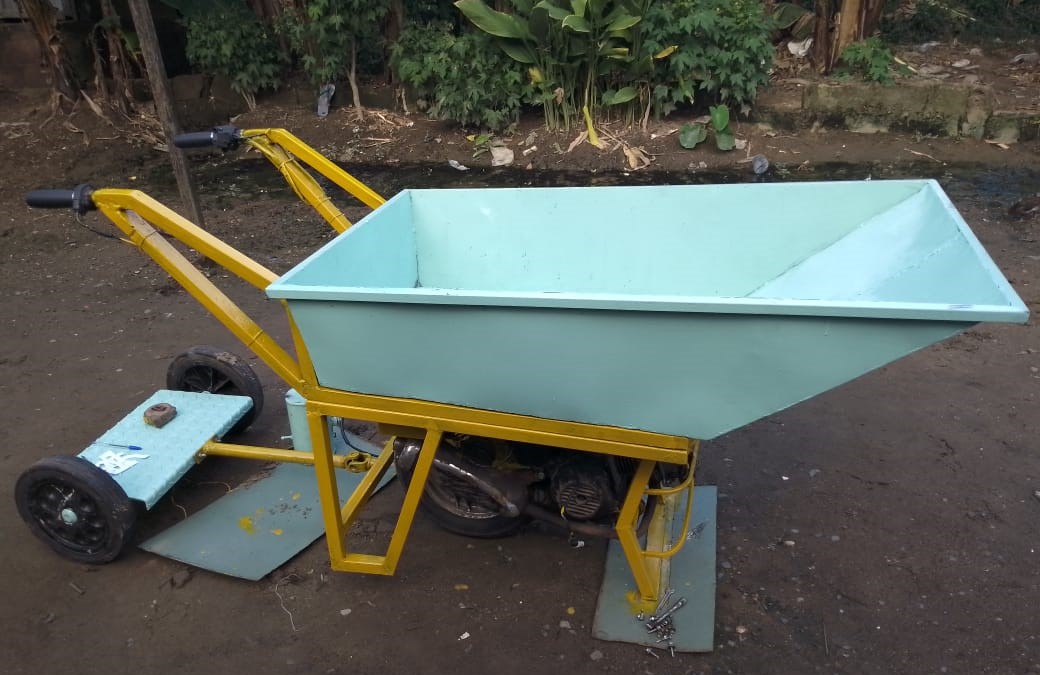
Motorised Wheelbarrow

Context

In Cameroon, wheelbarrows are important for construction, farming, and market activities, but traditional ones require heavy manual effort. Our goal was simple but ambitious: design a motorized wheelbarrow that is easy to use, comfortable, and adaptable to users of different heights, while working with limited resources and without relying on 3D modeling or simulations. Everything had to come from our hands, minds, and experience.

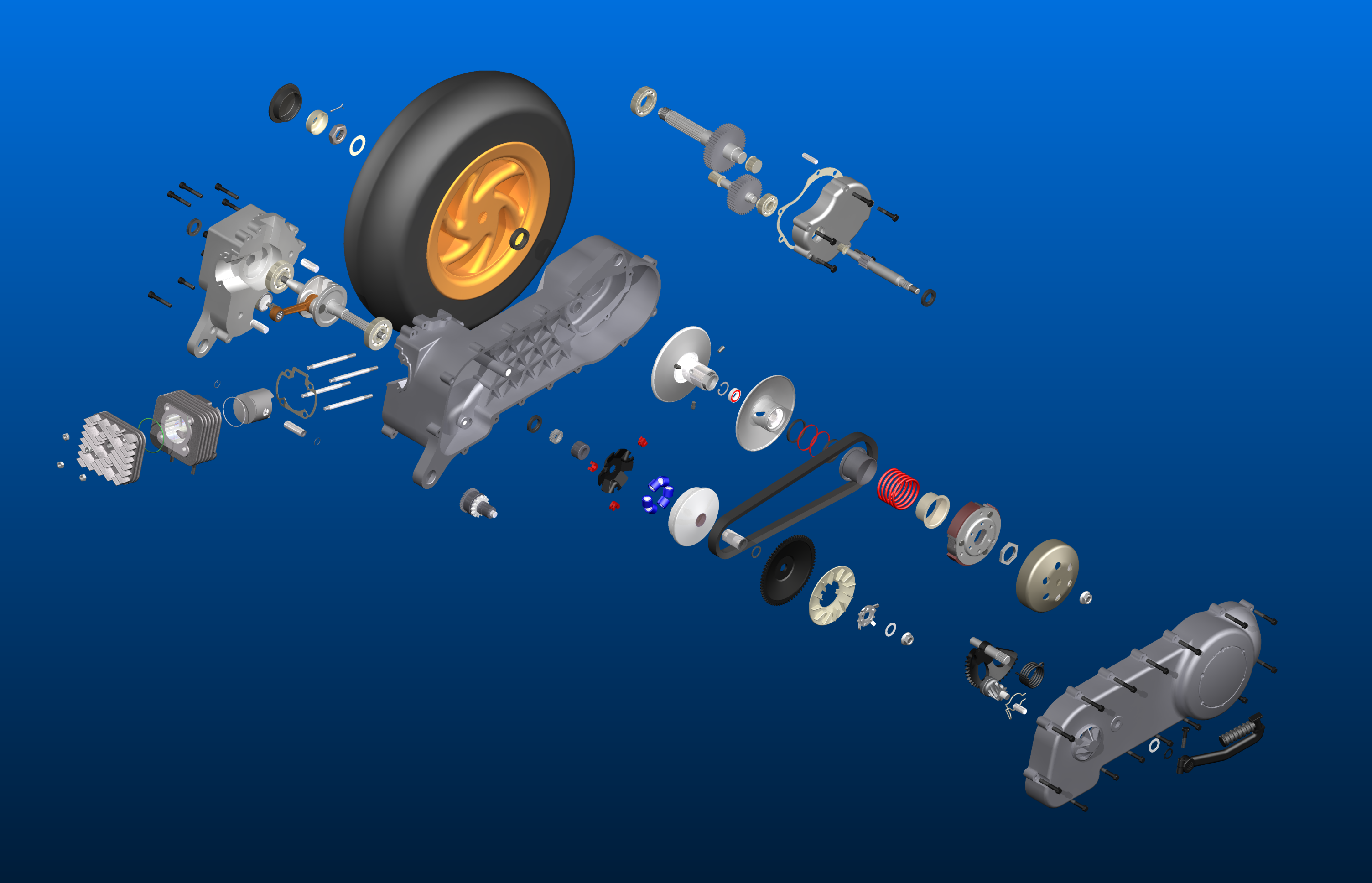
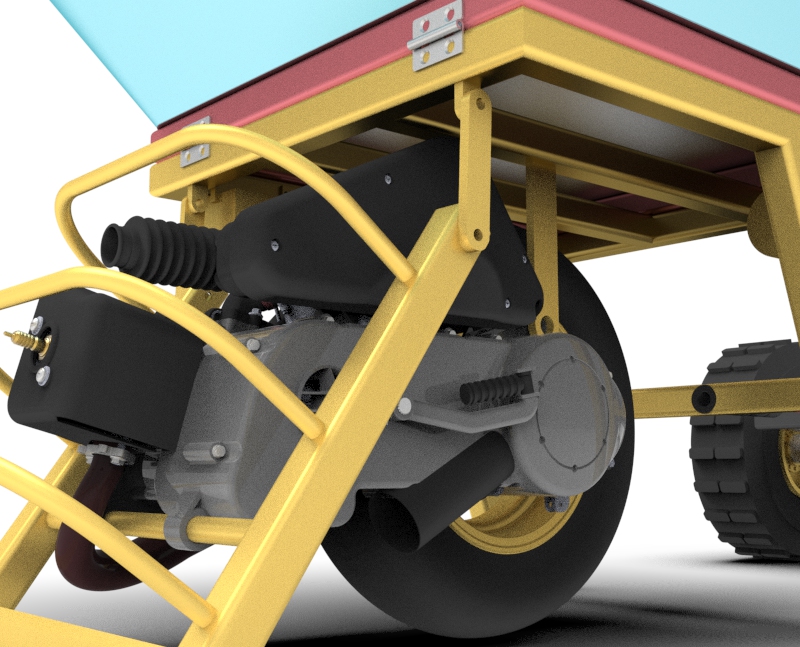
The first challenge was finding the right motor. We quickly realized that automotive motors, like those from Nissan or Toyota bikes, were too bulky, non-automatic, and hard to integrate with a human-friendly wheelbarrow height. So, we chose a reconditioned e-scooter motor, which came pre-mounted with a wheel (~35–40 cm). This was perfect for ergonomics, easier handling, and integration with our wheelbarrow design.

It took three weeks to source a reliable motor within our tight budget. Tchoffo and I handled the electrical refurbishment, fixing the motor so it could reliably start and run.

Design & Build

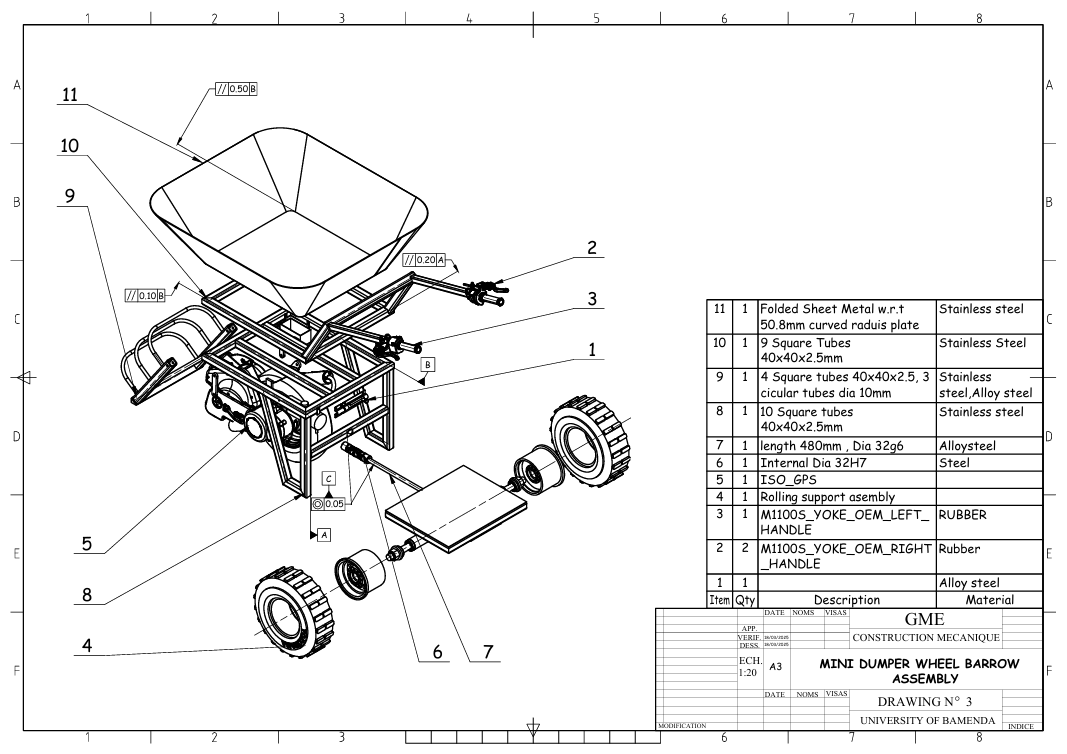
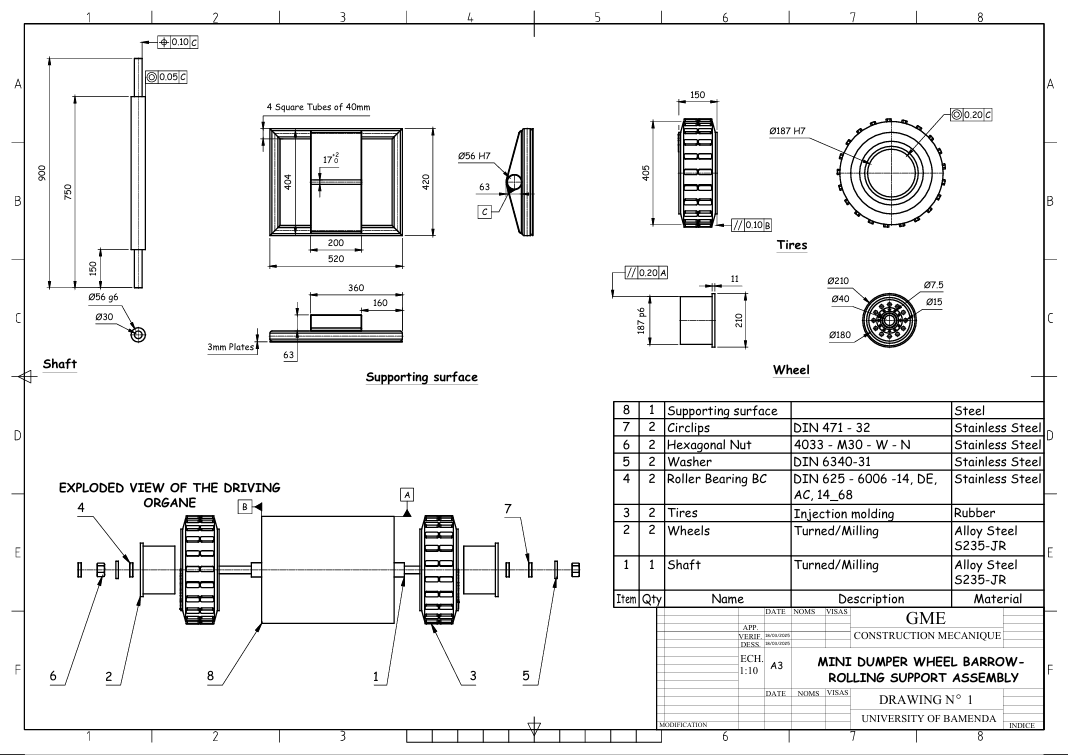
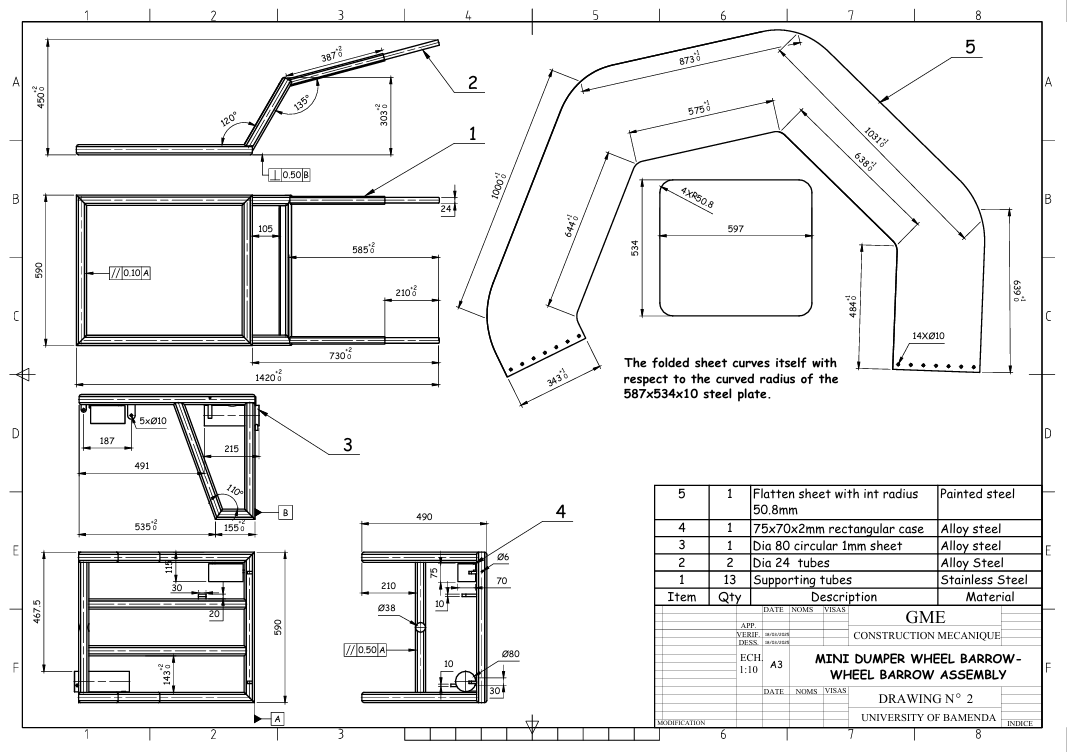
Building the wheelbarrow was purely hands-on engineering: welding, cutting, and assembling the frame. No CAD, no simulations—just experience, measurement, and iterative thinking. We focused on several key aspects:

  • Battery and oil tank placement: Ensuring it is secured yet accessible for maintenance
  • Wheel and handle configuration: Making it comfortable and suitable for users from 1.5 m to 1.9 m, whether male or female
  • Motor integration: Handles positioned so that starting the motor felt like riding a motorized bike, intuitive for the user
Motorised Wheelbarrow demonstration

Collaborative Problem-Solving

In this journey, collaboration was key. For instance, Badou suggested adding an adjustable "elevator" system so shorter users could stand comfortably. On the contrary, Tchoffo opposed it due to budget limits. It posed a serious issue because as the team lead, I had to figure out an equitable outcome to this problem. My proposal was to use larger wheels, which raised the user slightly, balancing comfort and cost.

User-Centered Design

User-centered design was crucial. We continuously tested the wheelbarrow with each team member to ensure ergonomic comfort and safe handling, adjusting measurements to accommodate everyone.

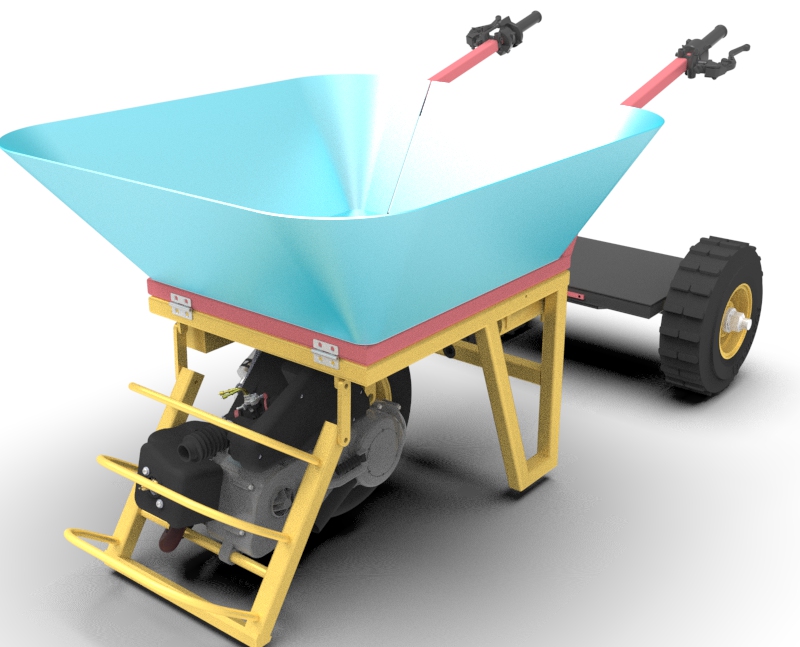
Complete view of the motorised wheelbarrow showing frame and motor assembly
The Motorised Wheelbarrow
Detailed view of the wheelbarrow frame structure and welding
The Wheelbarrow's Frame
Oil tank installation showing secure mounting and accessibility
The Oil Tank
Support stand mechanism for parking the wheelbarrow
The Stand

Conclusion

The motorized wheelbarrow was successfully completed in three weeks. It comfortably supports:

  • Male users: 1.75–1.90 m
  • Female users: 1.50–1.90 m

Hands-on measurement and practical iteration allowed us to finish the project faster than creating 3D models, 2D plans, and simulations, which could have taken 4–6 weeks longer given our team's resources.

Key Lessons Learned

  • Not all projects need CAD or simulation: Real-world iteration works, and sometimes faster
  • Collaboration matters: Understanding each team member's perspective ensures designs are functional, inclusive, and cost-effective
  • Ergonomics and comfort are essential: A mechanical design is only useful if the user can operate it safely and easily
  • Resourcefulness drives innovation: Limited budget pushed us to find creative, practical solutions, like the larger wheels instead of an expensive adjustable platform

This project refined my mechanical design, electrical troubleshooting, and collaborative engineering skills.

Back to Projects