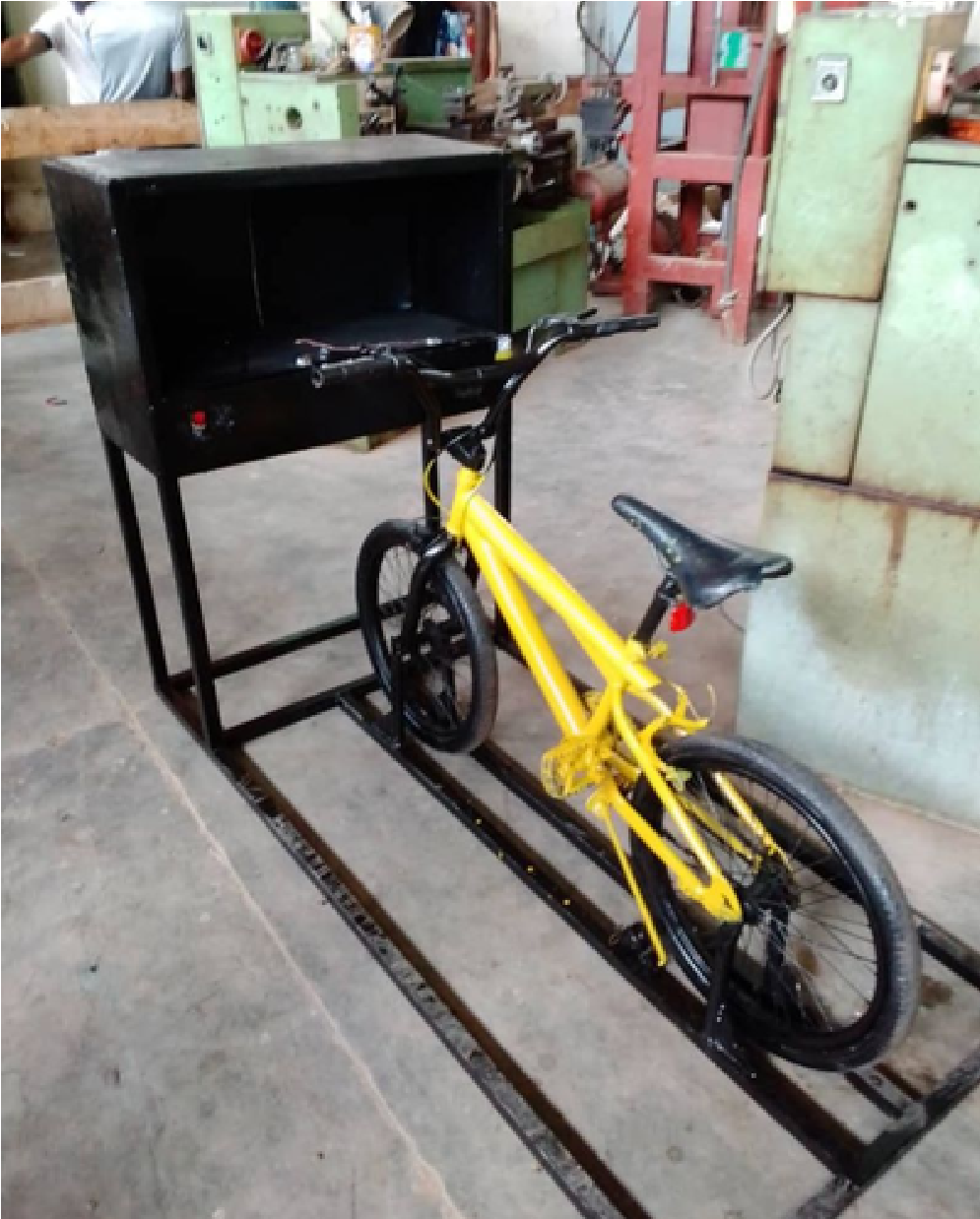
Pedal Power Mobile Phone Charger

Context

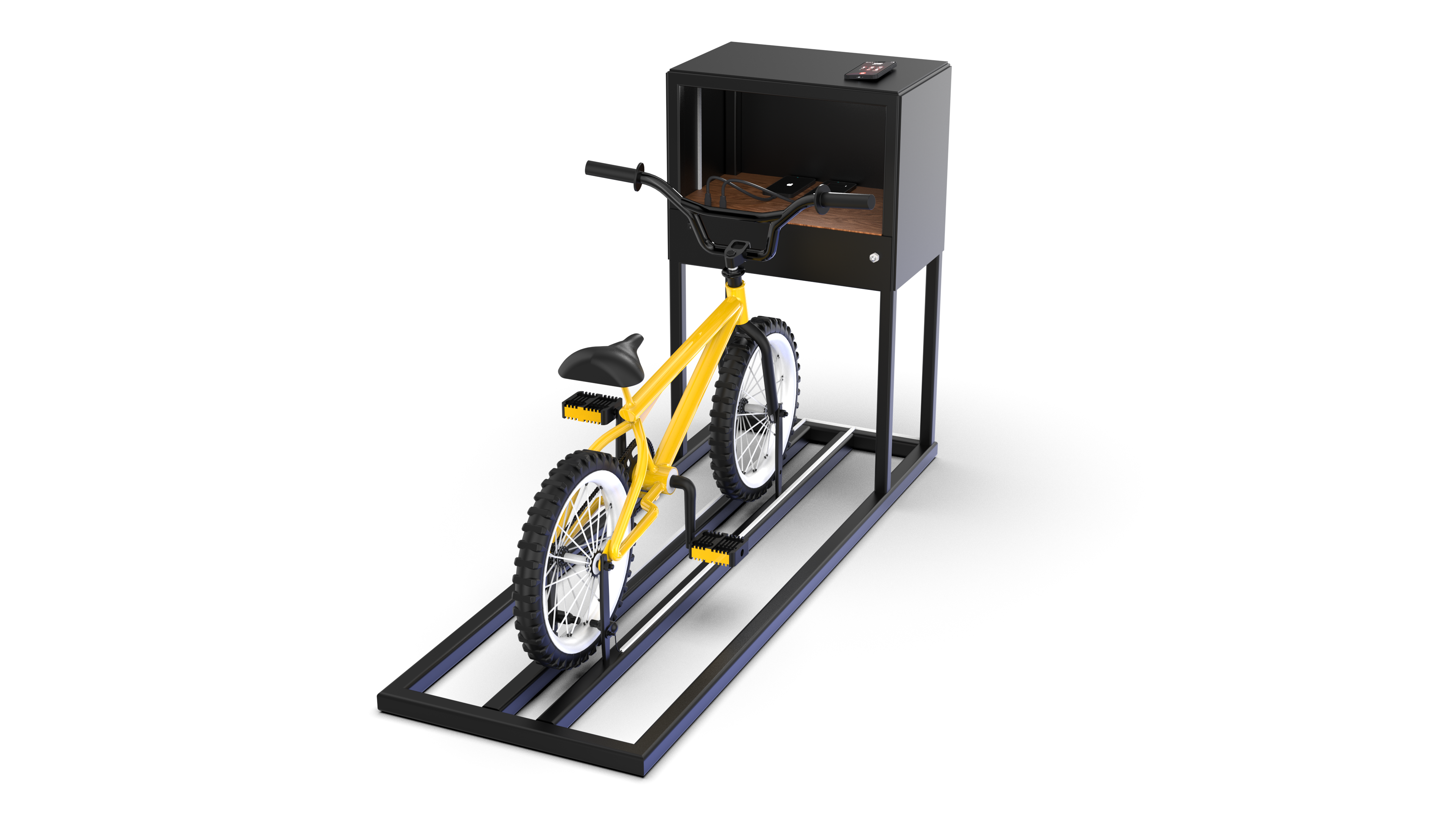
The pedal power mobile phone charger (PPMPC) is a machine which uses human power to generate electricity to charge mobile phones. As the initiator of the project and leader of an interdisciplinary team comprising of 3 bachelor's students at the Higher Technical Teachers Training College (HTTTC), I played a pivotal role in conceptualizing and implementing the PPMPC project.

This project was conceived in response to the acute energy scarcity faced by the local communities of Ange Raphael and the University of Douala as a whole. My primary objective in initiating this project was to provide an alternative to the unreliable national grid supply in the university, thereby ensuring that students have access to a reliable source of power for charging their devices and facilitating their research endeavours. This project was completed in 3 weeks, from February to March.

In this project;
  • I Implemented DFM (Design for Manufacturing) principles to reduce product assembly costs
  • We Used the Empathize-Define-Ideate-Prototype-Test strategies when working on this design
  • The assembly was designed using SolidWork. Rendering and animation were done with KeyShot. Premiere Pro and Adobe After Effects were used to create the video

Contributions and Collaborators

  • Problem Definition
  • Concept Development
  • Detailed Design
  • CAD Modeling
  • Design Optimization
  • Teboh Tina Kah
  • Teboh Tina Kah
  • Tchoffo Cyrille
  • Nintendem Zebaze Frank Loic
  • Tchoffo Cyrille

Design & Build

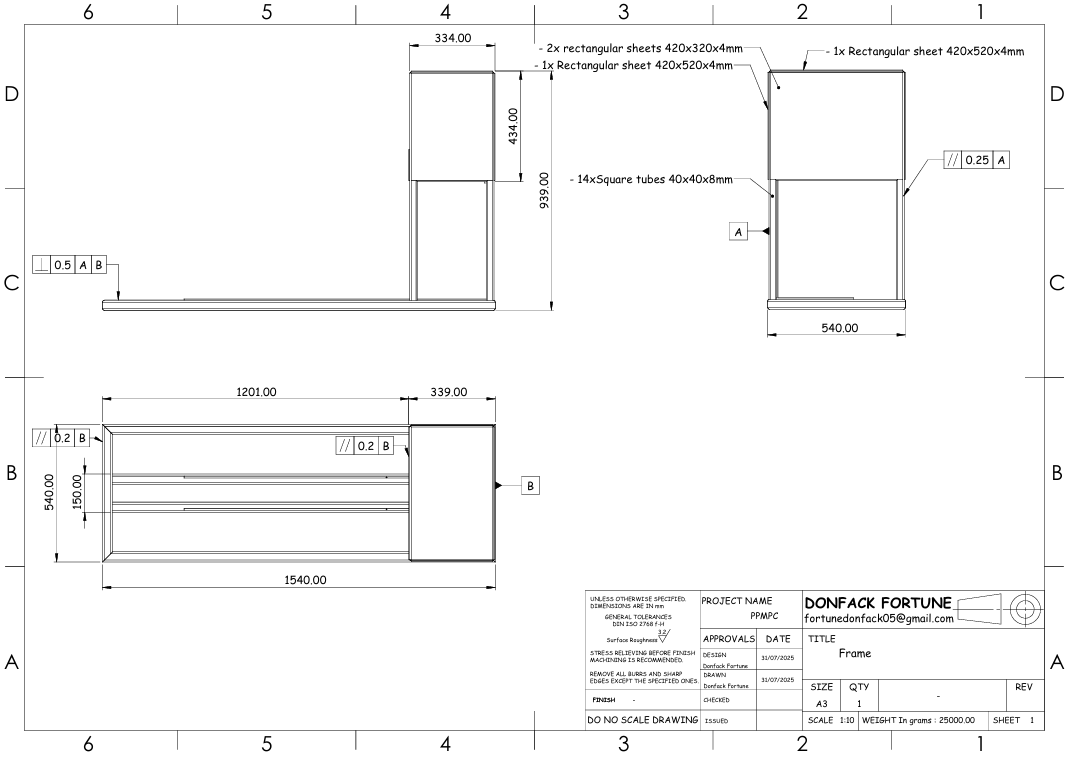
The design and manufacturing process involved numerous sketches, rough proofs-of-concept, calibration and precision in the mounting of the different electronic components. Furthermore, I took a lot of time on the design of the frame of the machine because I emphasized mostly the user's comfort. CAD designs of the PPMPC as well as the electronic setup were constantly revised to meet the needs of the team and user specifications.

I conducted the entire research, ideation, and prototyping process, including learning weldment designs and SolidWorks advanced part design over the course of 1 week. After completing my course, the team hired me to finish the first working prototype of the frame and the mountings of the different electronic parts for a presentation at the HTTTC Science and Engineering Festival, and the mechanical engineering department's new bees welcoming.

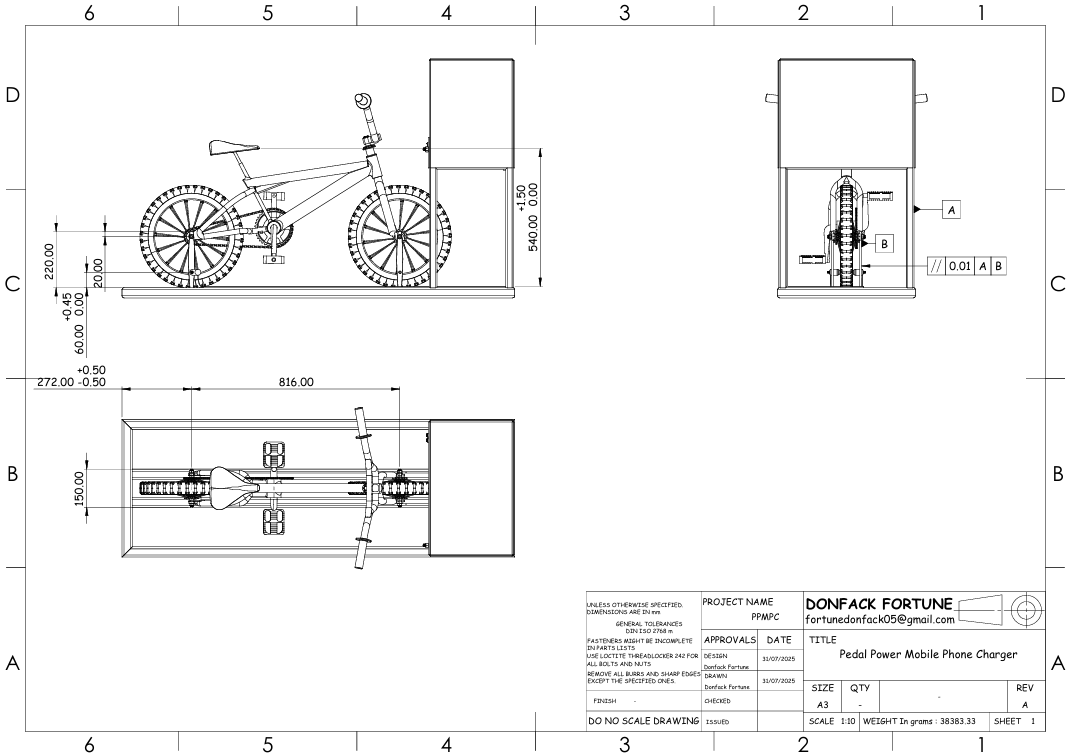
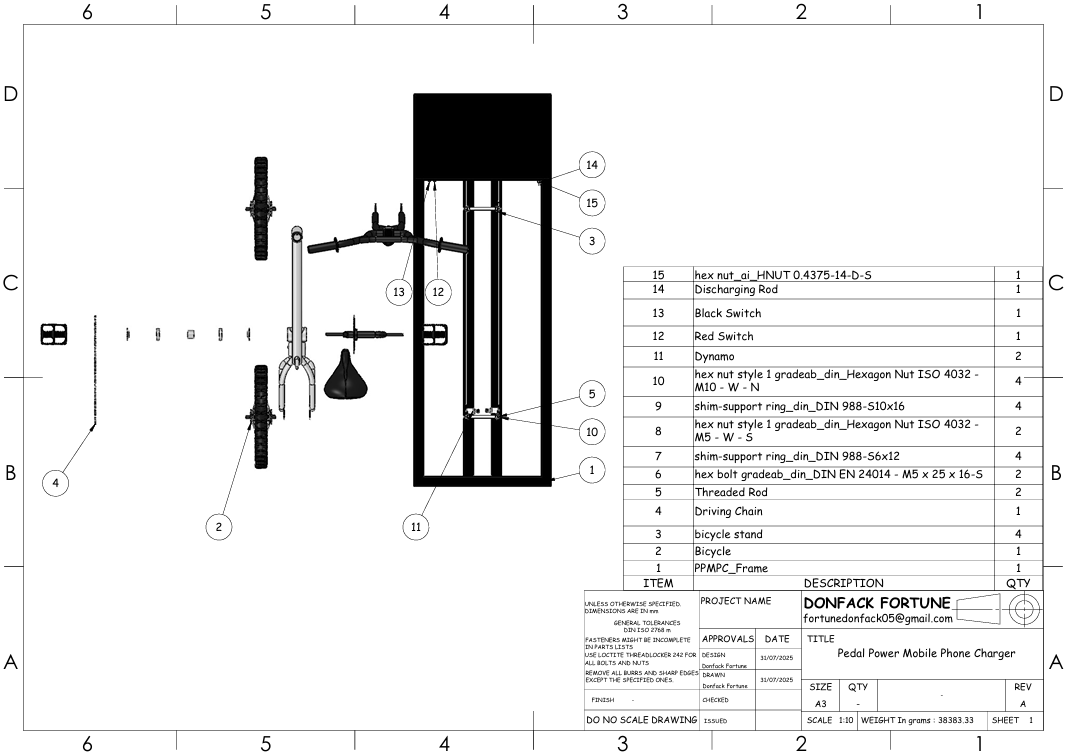
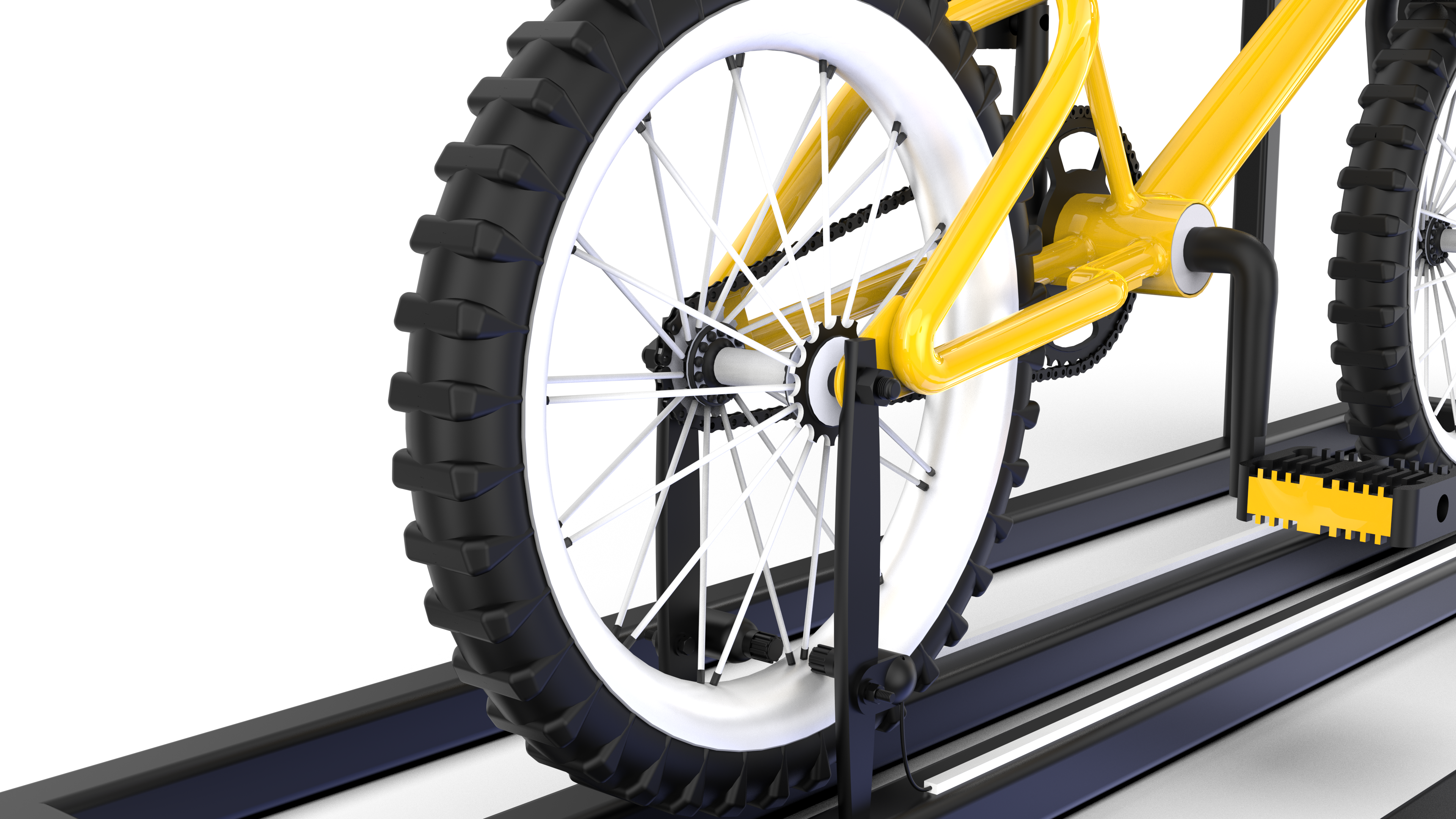
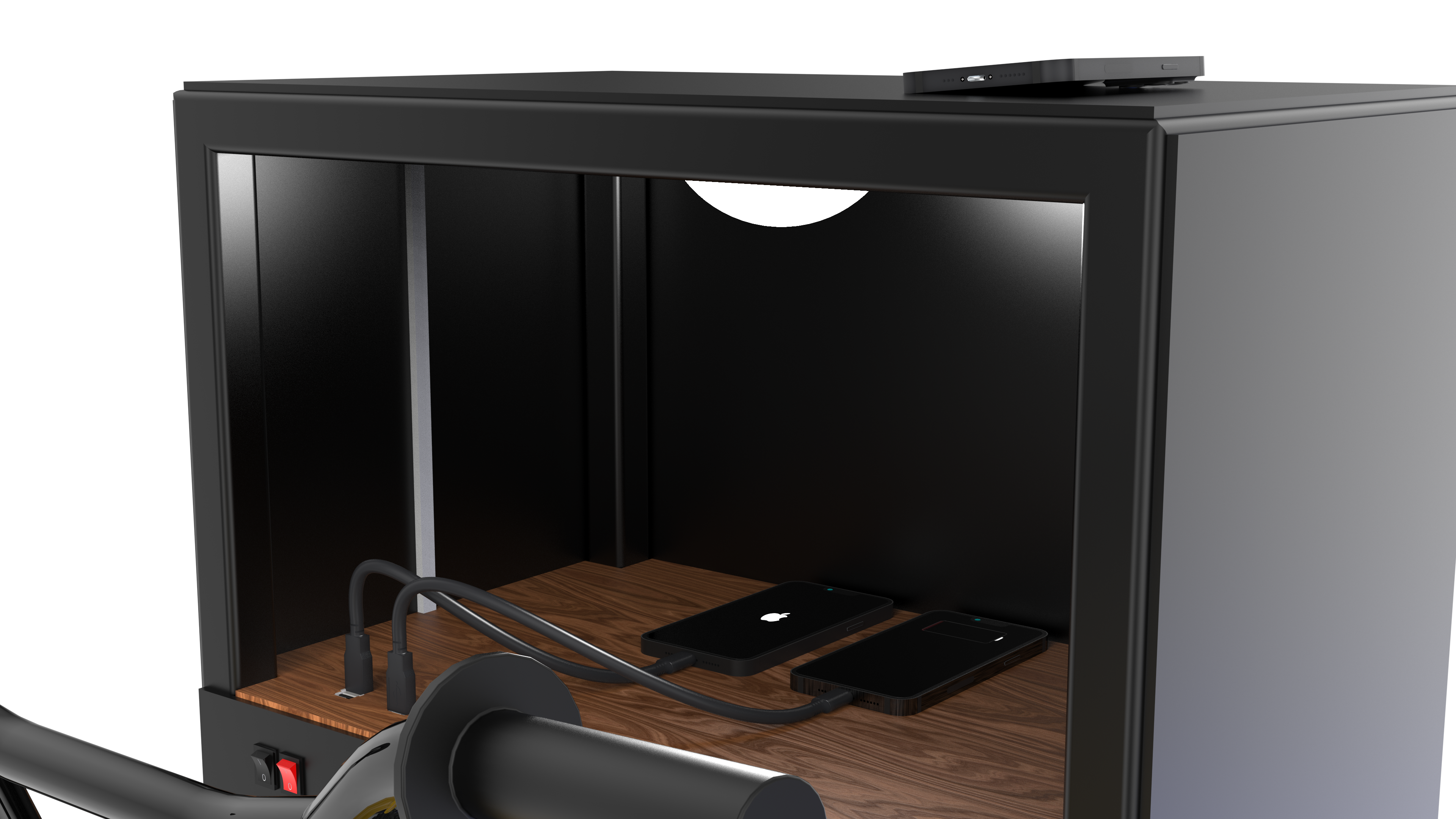
3D CAD model of the Pedal Power Mobile Phone Charger showing frame structure and components
Complete 3D CAD assembly of the PPMPC
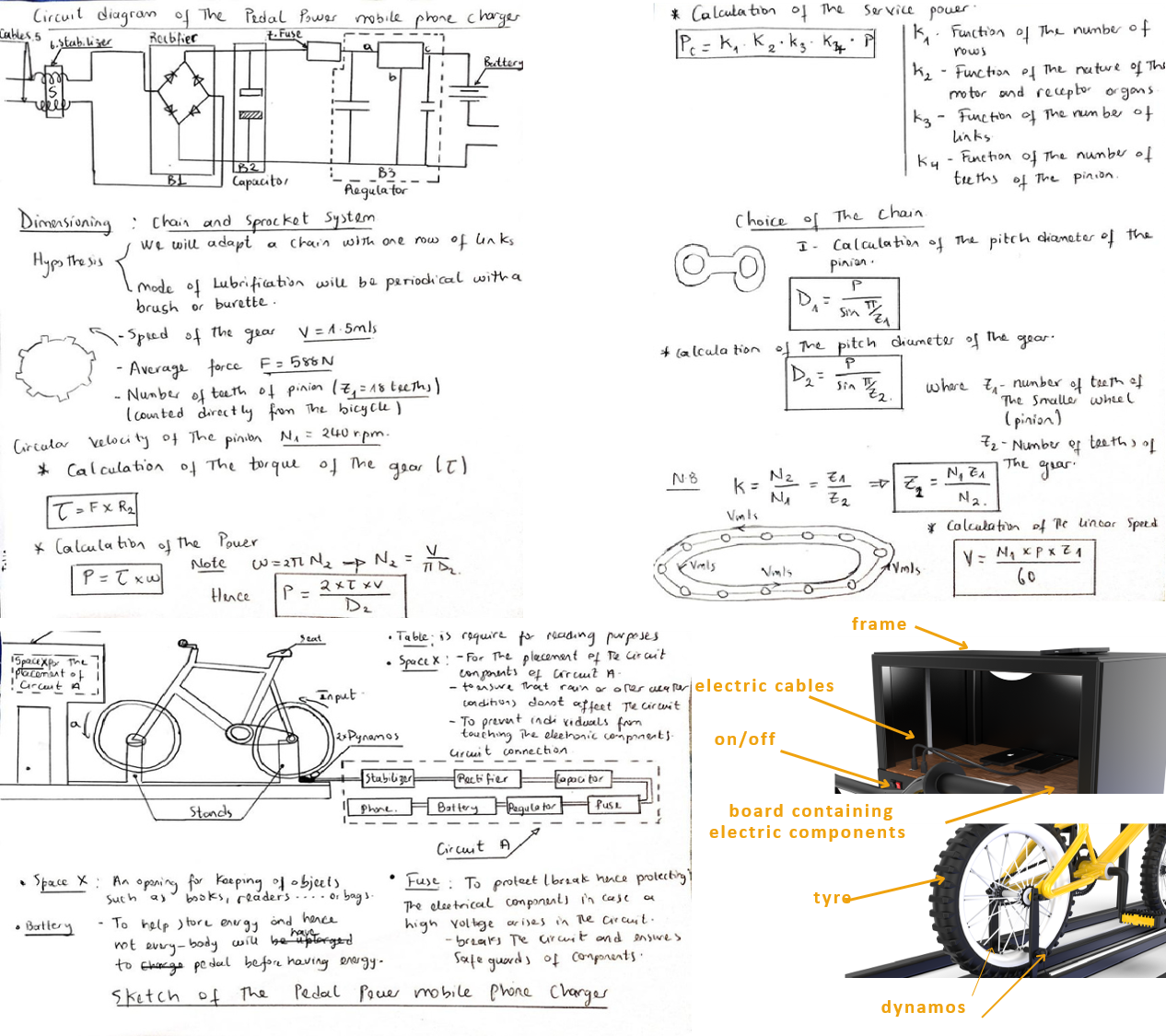
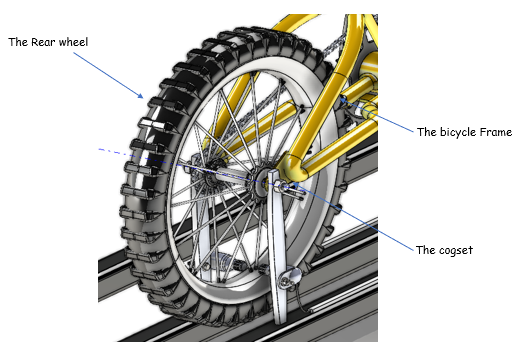
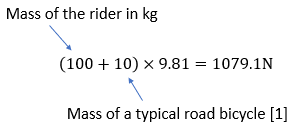
Engineering calculations showing power transmission and gear ratio analysis
Engineering calculations and power transmission analysis
Electrical circuit diagram showing charging system components and connections
Circuit diagram and electrical component layout

Test & Validation

Testing and validation was performed to ensure that the charger meets performance and safety standards.

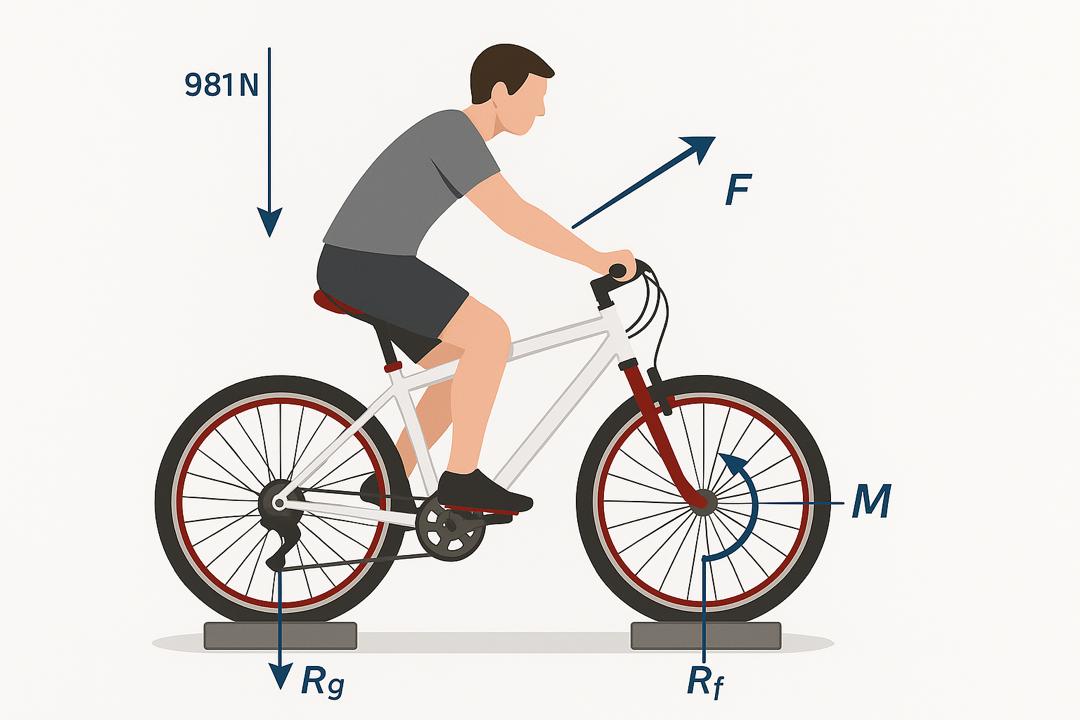
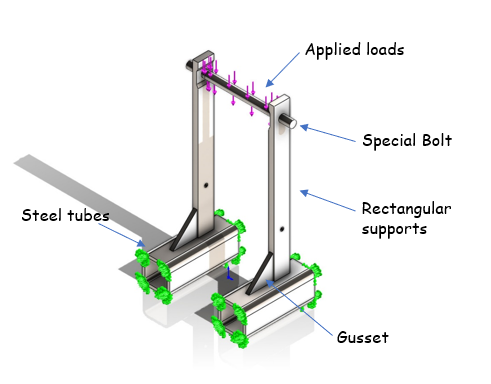
In this analysis, we examine the effort exerted by both the bike frame and the rider's body, and how these forces impact the support structure and special bolt. To achieve this, a static structural analysis was conducted using SOLIDWORKS.

Simplified CAD model prepared for finite element analysis simulation
Design simplification for FEA simulation
Detailed view of support structure showing critical load-bearing components
Support structure description
Alternative perspective of support structure highlighting connection points
Support structure - alternate view

Simulation Results

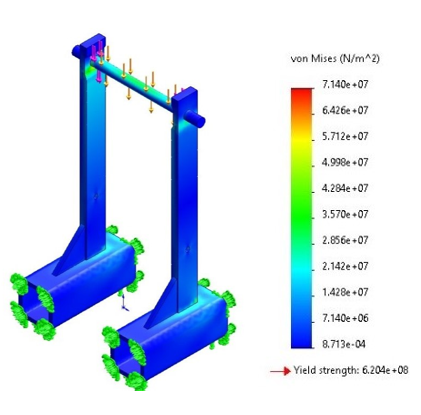
For this analysis, appropriate boundary conditions and support constraints were applied to the model to ensure realistic behavior under loading. The Von Mises stress chart confirms that the support structure is capable of withstanding a load exceeding 800 N without failure.

Note: For detailed information regarding the case study and the assumptions made during the simulation, please download the simulation document provided above.

Von Mises stress distribution chart showing stress levels across support structure
Von Mises stress distribution analysis

Refine

Based on the simulation results and on-site testing of the model, design improvements were implemented.

  • Ergonomic Adjustment: The design was optimized by determining an appropriate height that ensures user comfort while accommodating a wide range of riders, from the 5th percentile female to the 95th percentile male.
  • Structural Reinforcement: Gussets were strategically added to critical joints to minimize the risk of fatigue failure and enhance overall durability of the support system.
  • Weight Optimization: The design was refined to maintain a weight of 40 kg, ensuring portability without compromising structural stability.
Back to Projects