Quick Animation
Quick animation of the BUR machine with a clear description of its functioning
To design and manufacture a beans unwrapping machine using limited materials to address the issue of low beans production efficiency and quality by automating the unwrapping process for small and medium enterprises in Cameroon and Central Africa. The idea for this project came to me in an attempt to explore another culture while trying to affect social change.
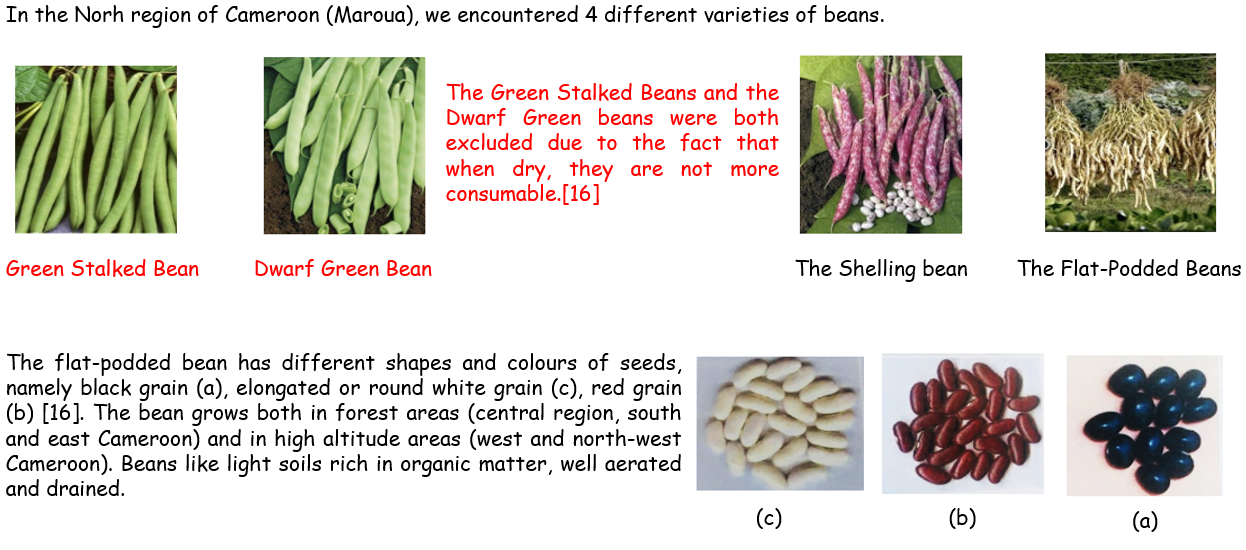
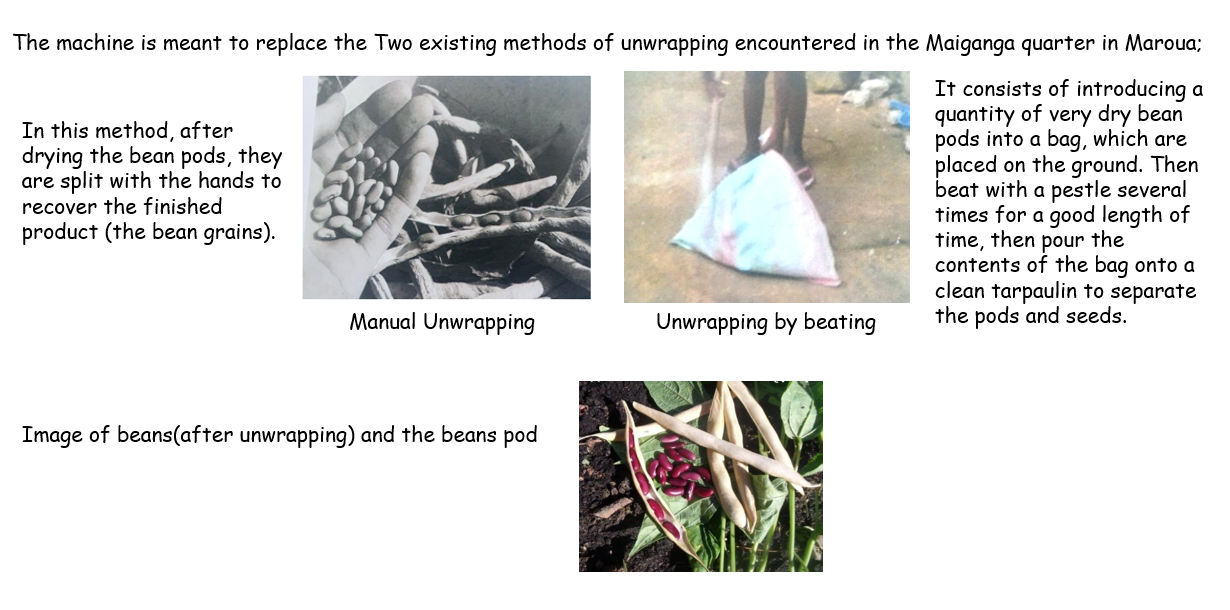
Invited by a friend of mine, I visited Maroua, a city in the northern region of Cameroon for tourism. I met some local bean farmers and processors and observed their traditional methods of unwrapping beans. Astonished by how slow and labour-intensive these methods were, I decided to investigate the problem further. The overarching goal was to develop my understanding of the machine design process and to further my competency in mechanical engineering design and machining. This project was done in 2 months.
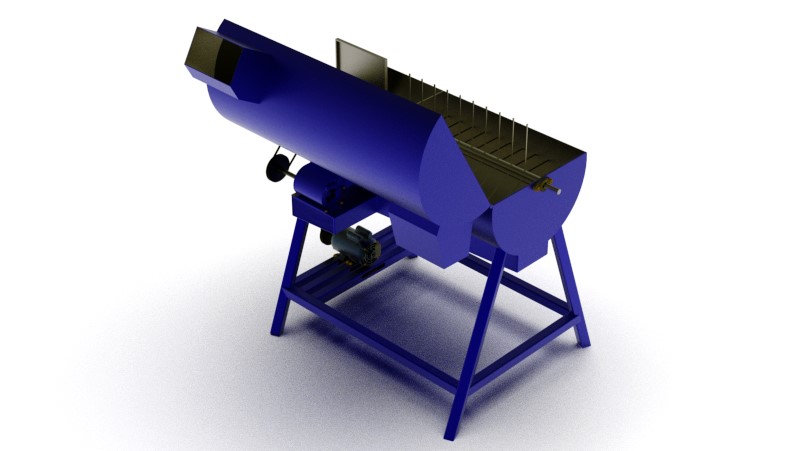
Initially, I brainstormed and prototyped competing designs. The final design was selected based on the raw materials available, the parallel motor configuration, and the fan position. These features offered more stability and reduced the vibration rate of the machine, which was essential for the desired outcome.
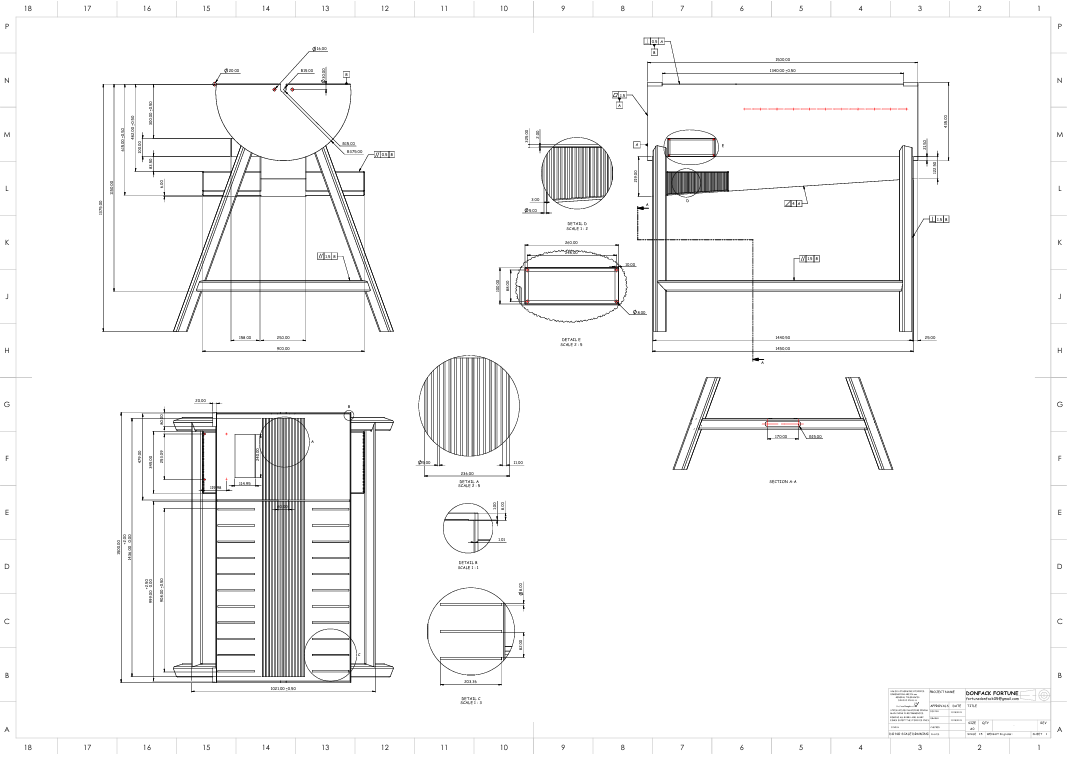
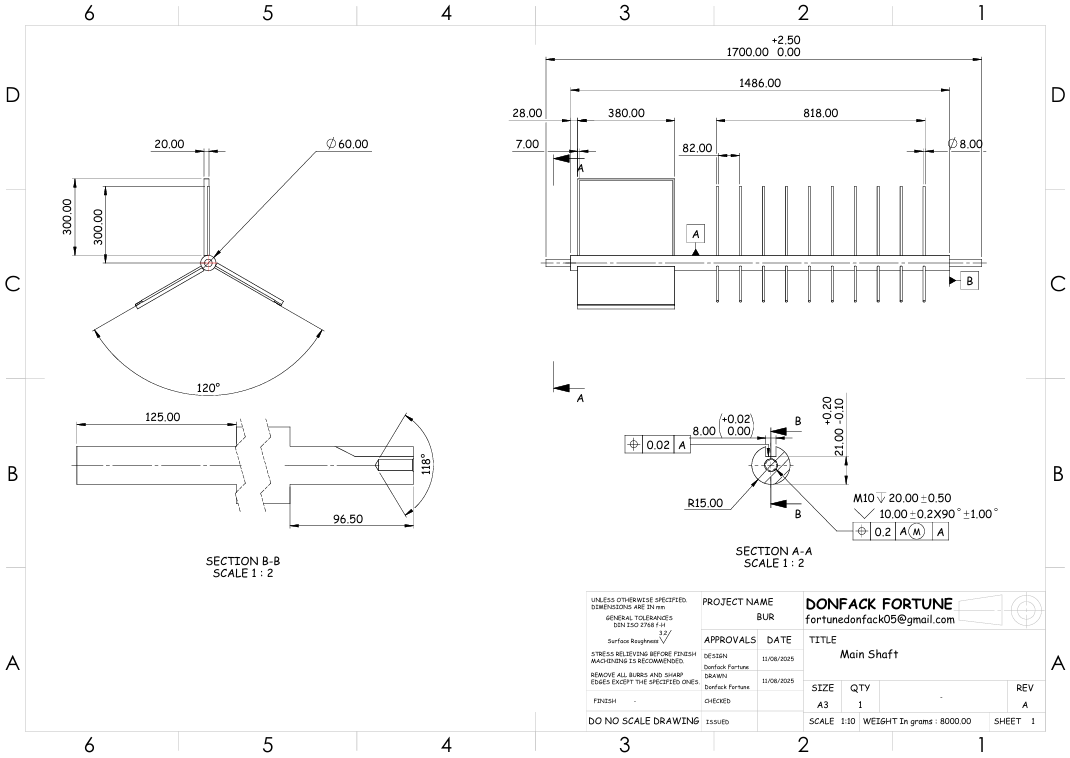
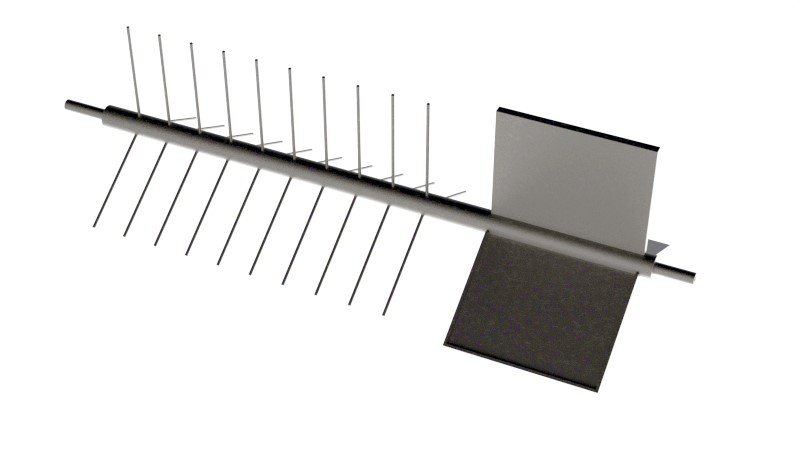
To optimize the shaft for the desired torque and speed specifications, I developed blades of variable dimensions with a 5cm distance between each other, mounted at 120 degrees circularly. This ensured proper unwrapping of the beans and proper rotation of the shaft with respect to the motor force to prevent the beans from breaking.
A double groove pulley was used to connect directly the motor, shaft and fan, partitioning the driving force of the motor between the shaft and the fan. The motor required was a closed asynchronous motor LS90L of Pm = 1.1 kw and speed of rotation Nm = 1500rpm. However, this motor was not available, so a Ys series tree-phase asynchronous JB/T 1009-2007 motor was used instead.
A flexible CAD assembly of the different components was used to keep the machine as short as possible. Knowing from previous works how the bulkiness of a machine matters, I opted for a narrow model. This allows easy access to the shaft for refinement and repair. The pulley and belt are placed on the outside to permit easy interchangeability.
To ensure ease of manufacturing, we focused mainly on the design of the frame and the shaft. During the design process, I took great care in selecting the appropriate steel thickness, as it plays a significant role in determining the overall weight of the machine. The shaft on the other hand, required a lot of precision i.e. If the shaft rotated too fast and the spacing between the mobile blades and the large movable blades wasn't appropriate, it instantaneously led to bean braking or missing to hit the target (beans).
The final design was chosen not only based on its ease of manufacturing but also due to the ability of fabricating it with the raw materials we possessed.
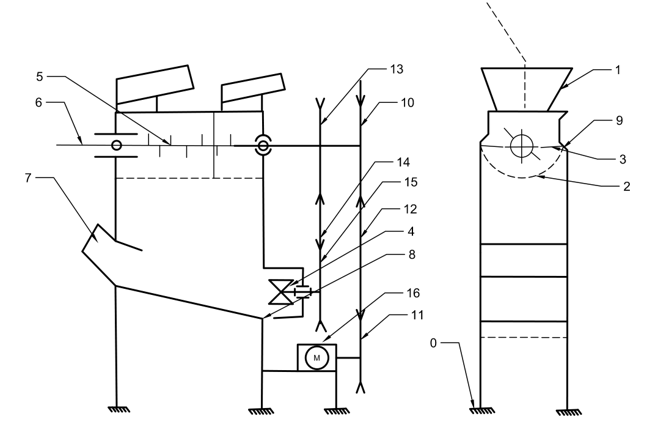
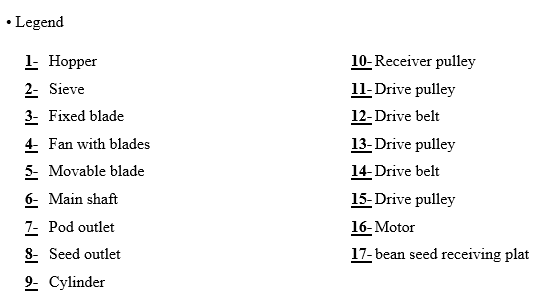
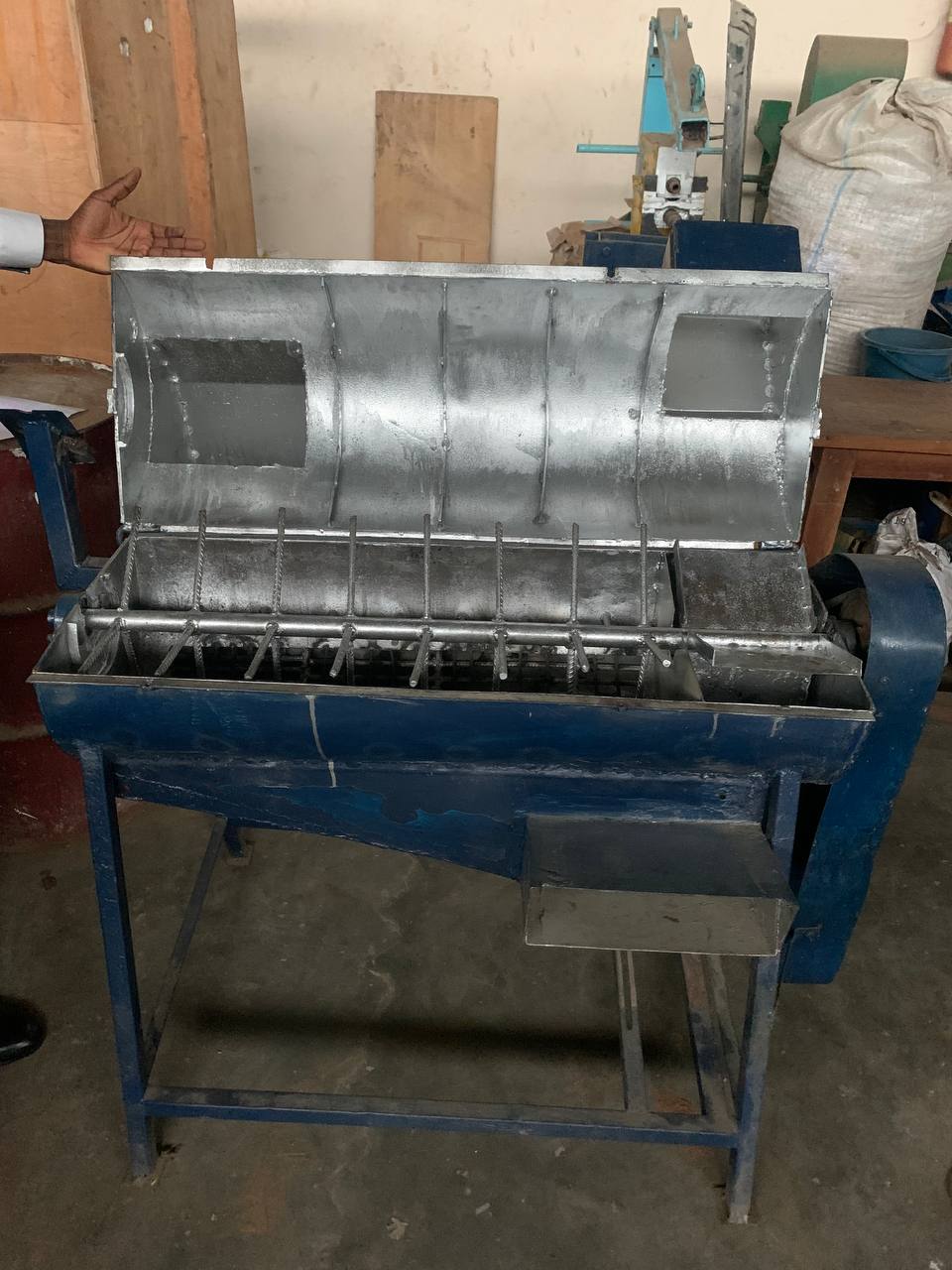
The dried bean pods are introduced into the hopper 1. When the motor 16 is activated, this transmits its movement to the main shaft 6 made up of blades 5. With the help of the belt pulley system (10 + 11 + 12). The beating of the pods between the moving blades 5 and the fixed blades 3 causes the unwrapping action. The sorting between the seeds and the pods is carried out by the fan with blades 4 thanks to the system (13+14+15). The grains are directed to exit 8 and the pods are directed to exit 7.
I couldn't have completed the Bur machine without the help of Nepitimbaye and Grace, 2D drafters and the wisdom of my friend Tatsinda, an ex-control engineering student. They provided invaluable technical advice and perspectives on how to consider the unexpected.
Although the Bur machine was a relatively simple project, Allan taught me how to walk through the system and consider exactly what each component does. This seemingly simple lesson was truly valuable.
I also learned an important lesson in management style. I started as the sole designer and implementer, but slowly transitioned to more management. There is overhead associated with each new team member, both in terms of onboarding and communication. For example, if a task is small enough, I may want to do it myself instead of spending the effort to communicate what needs to be done. However, this approach should be used sparingly.
If you are willing to expend the effort to teach and communicate base skills and expectations, the cost to execute tasks goes down. After a while, our smart team was able to extrapolate and operate more autonomously.
The adage "If you want something done right, you've got to do it yourself" doesn't hold true here. The addendum should be: "If you want something done right, you've got to communicate well and put in the work to set teammates up for success". I know this is an obvious principle, but living it was a visceral experience.