Sustainability · Mechanical Design · 2025

Banana Pseudostem
Shredding Machine

A belt-driven mono-disc shredder designed to valorise agricultural waste from Cameroon's banana industry — reducing dependence on imported equipment and turning biomass residue into compost.

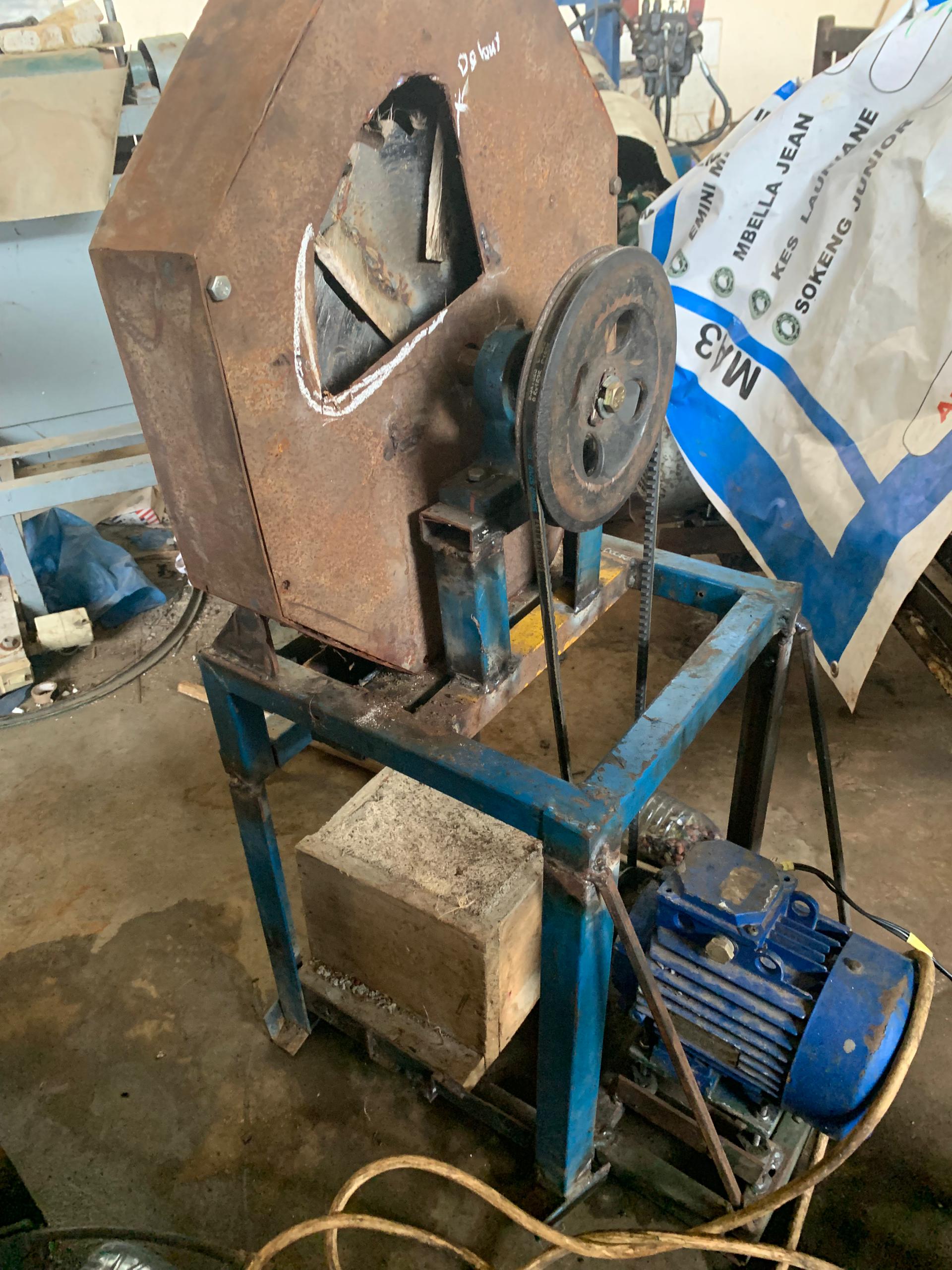
Banana Pseudostem Shredding Machine — completed prototype before finishing and paint application
Year 2025
Role Research Supervisor · Design Lead
Institution University of Douala
Collaborator Dr. Betene Achille
Category Sustainability · Mechanical Design

Project Case Study

The Problem

Cameroon is the leading banana producer in the Africa, Caribbean and Pacific zone and the fifth largest in the world. Yet the vast quantities of pseudostem — the fibrous trunk left after harvest — are routinely discarded or burned, creating environmental waste and losing valuable biomass that could be turned into compost or animal feed.

Existing shredding equipment available in Cameroon is either imported at high cost or designed for conditions that don't match local realities. There was a clear need for a machine designed from the ground up for Cameroonian agricultural conditions, buildable with locally available materials and tooling.

I was invited to supervise this project alongside Dr. Betene Achille, guiding students in applying fundamental principles of mechanical and agricultural machine design to a real-world sustainability challenge.
The Approach

We began by systematically identifying and validating the need, then conducted a full functional technical analysis before committing to a design direction.

The chosen solution was a mono-disc belt-driven shredder — a pulley-and-belt power transmission system integrating several functional sub-assemblies. This approach offered meaningful advantages for the target context: simplified construction, flexible power transmission, compact footprint, low maintenance requirements, and an optimised cost profile.

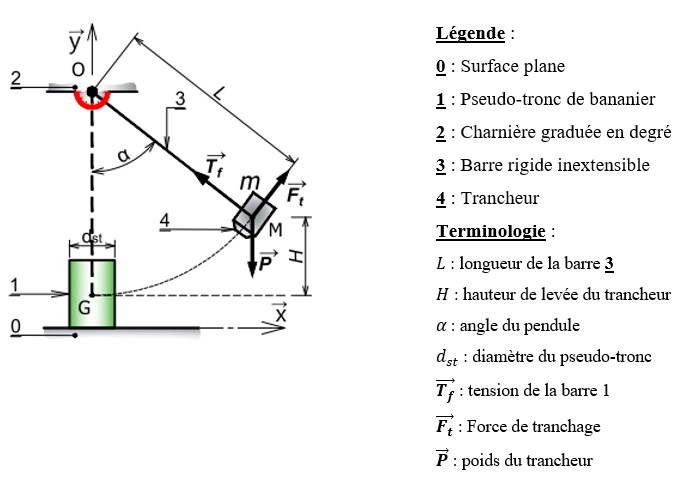
The design process followed rigorous mechanical sizing — shaft dimensioning, blade geometry, bearing selection, and frame rigidity — to ensure the machine could handle the fibrous, high-moisture content of banana pseudostems under sustained operation. A FAST functional diagram was developed to map all service functions before any component was sized.

The Outcome

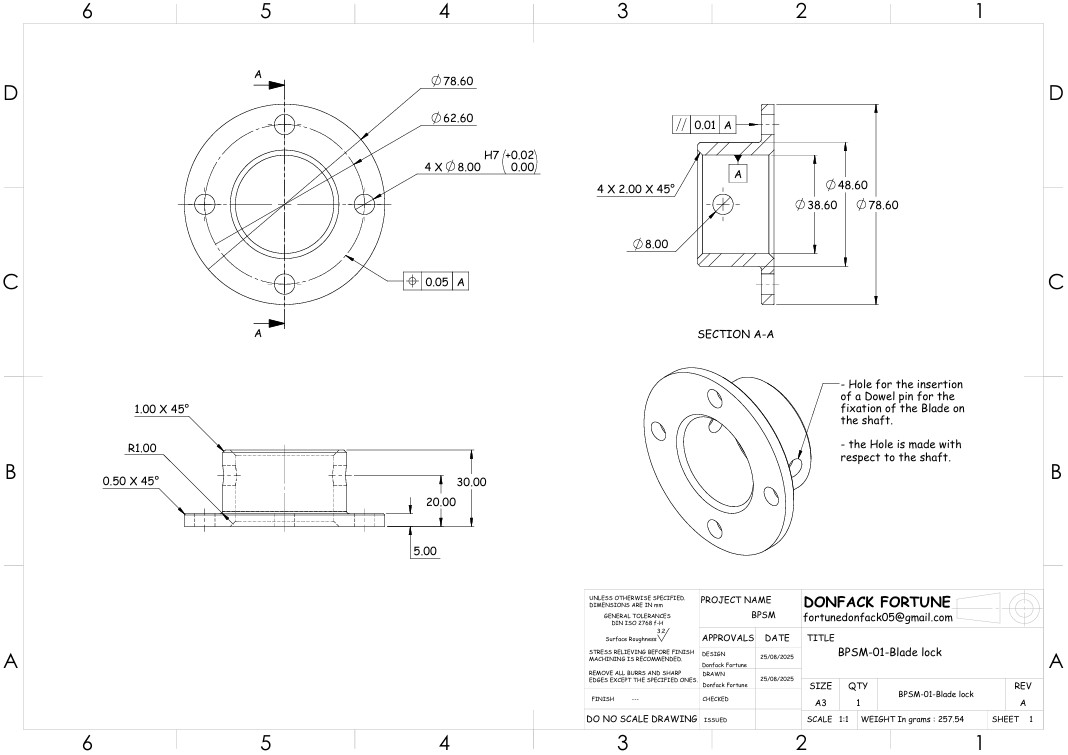
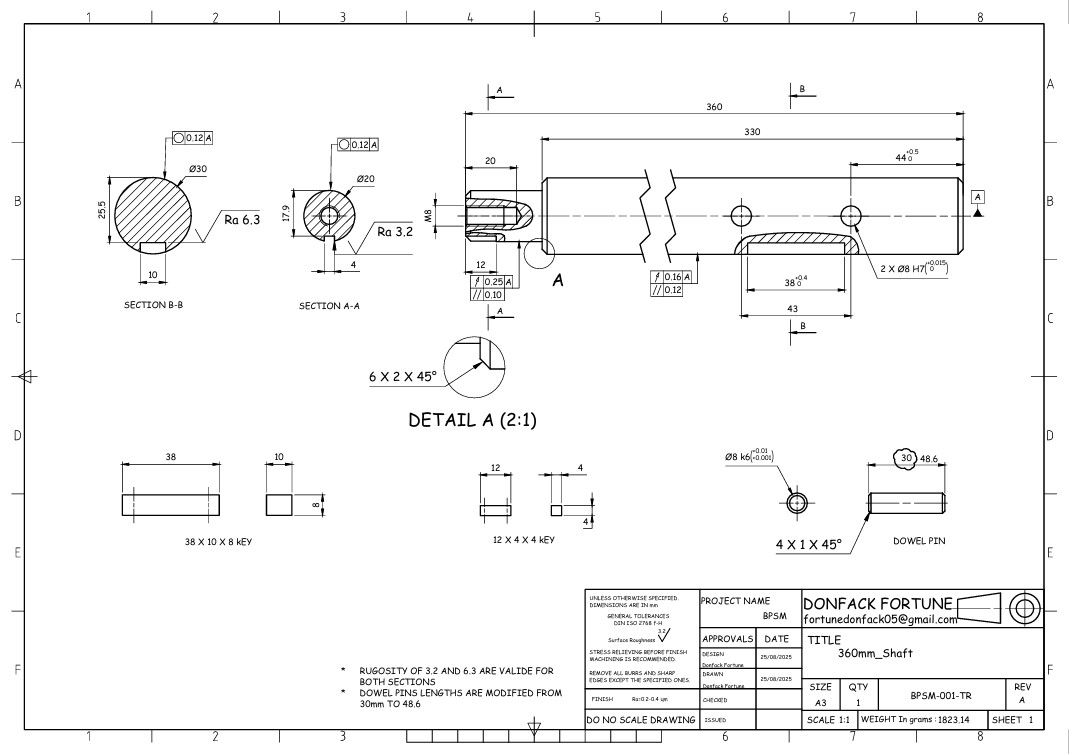
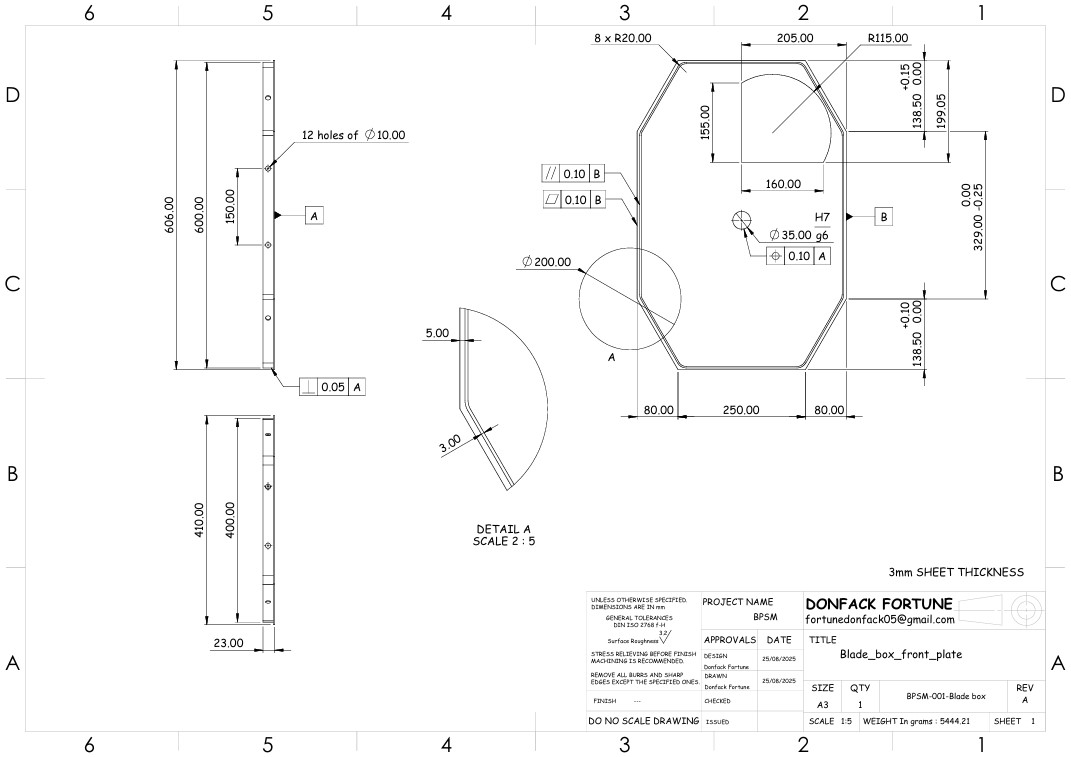
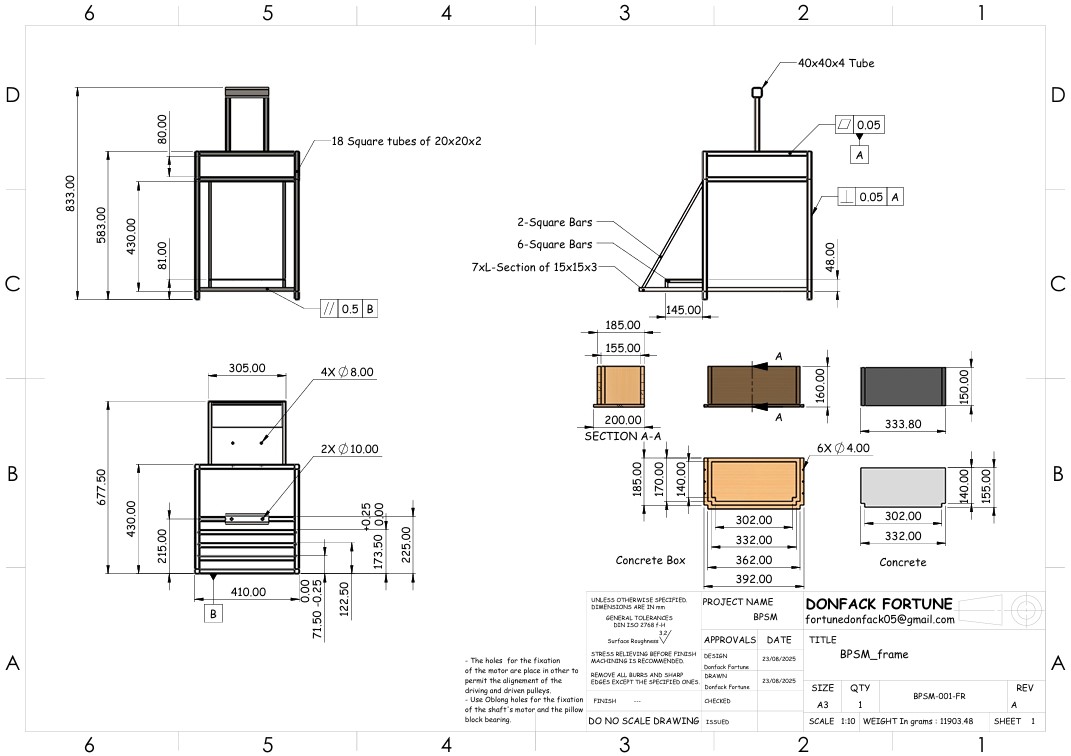
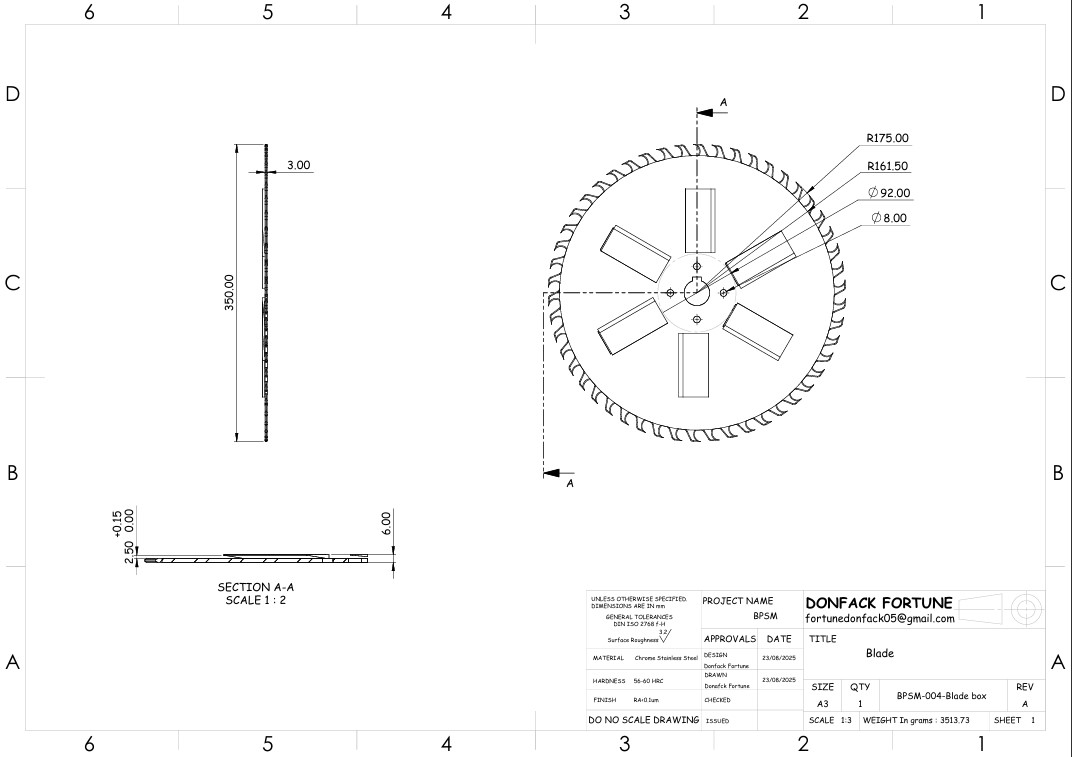
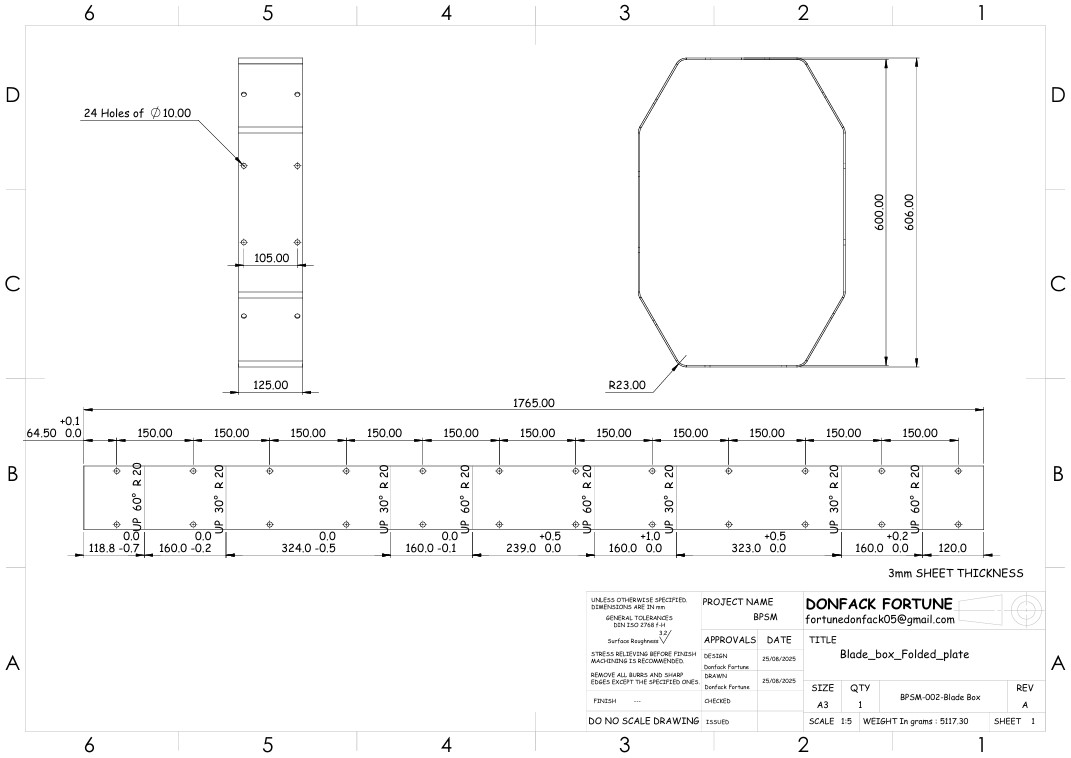
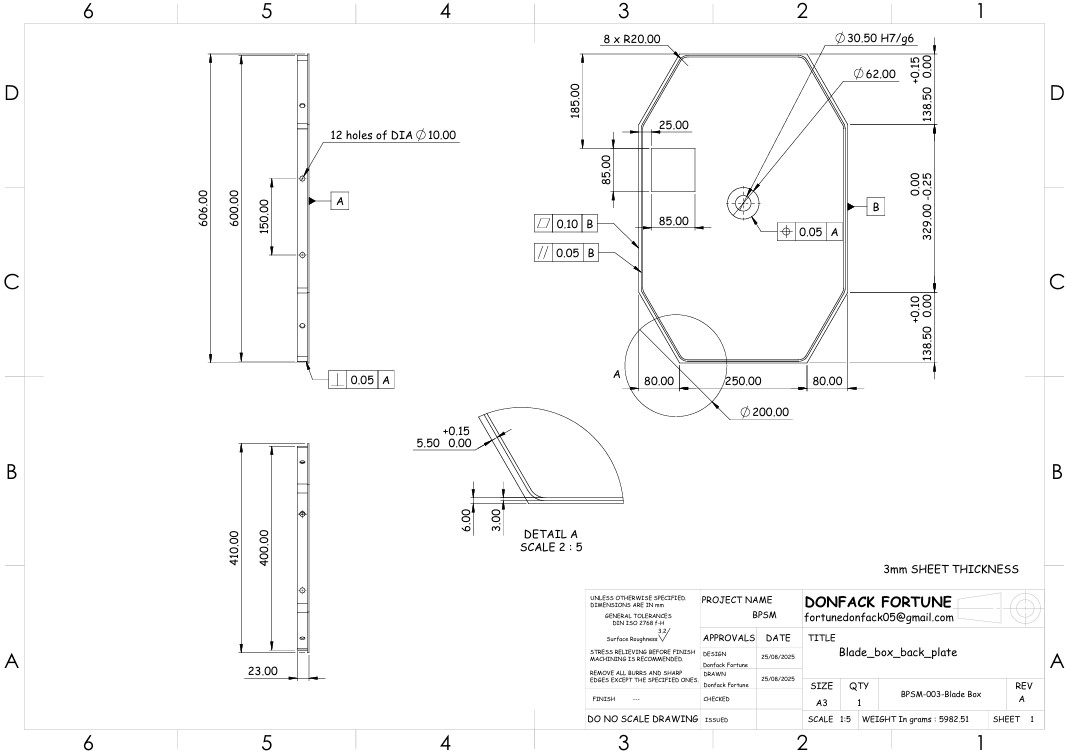
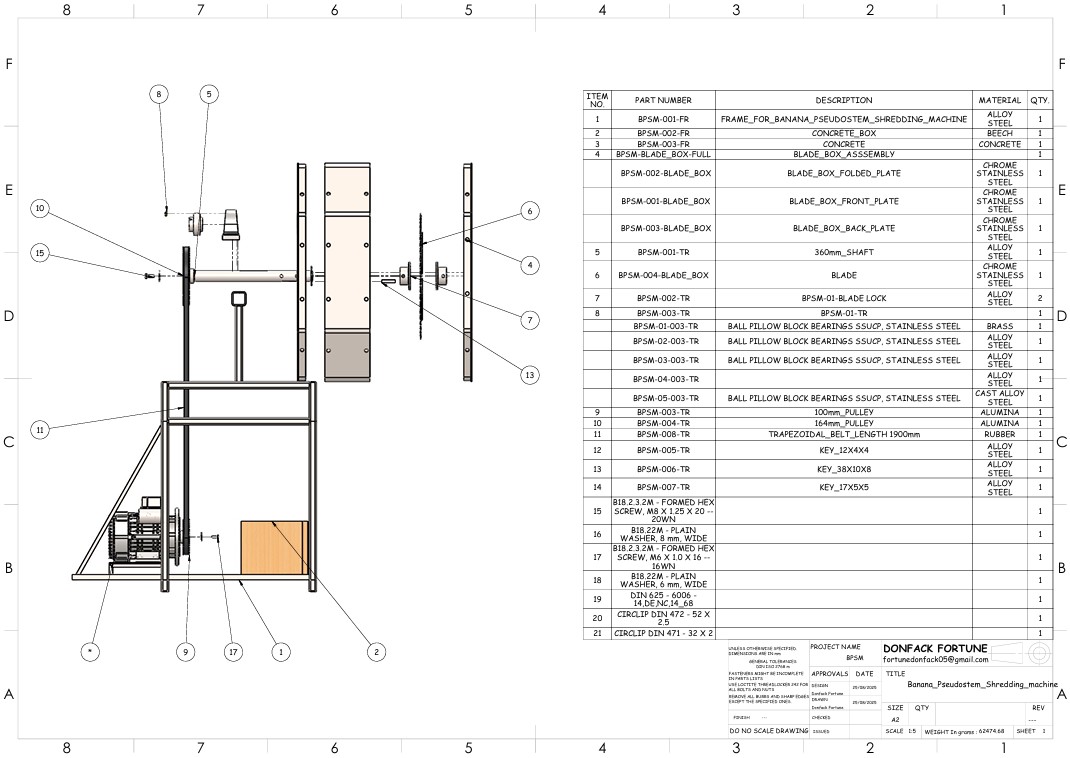
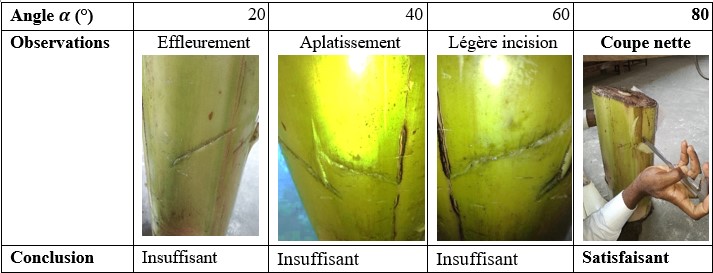
The project delivered a functional prototype validated through laboratory trials, with results confirming the machine's shredding effectiveness on actual pseudostem material. The full Bill of Materials, technical drawings (A2), and kinematic scheme were documented for potential local manufacture and replication.

This project demonstrated that high-impact agricultural machinery does not require industrial machine tools or imported components to be effective — it requires rigorous engineering thinking applied to accessible means.

Beyond the technical result, this was equally a pedagogical achievement. Teaching the team to move from constraint analysis to prototype was a lesson in how engineering knowledge is transmitted: not through directives, but through shared understanding and iterative problem-solving.


Technical Documentation

Engineering Drawings

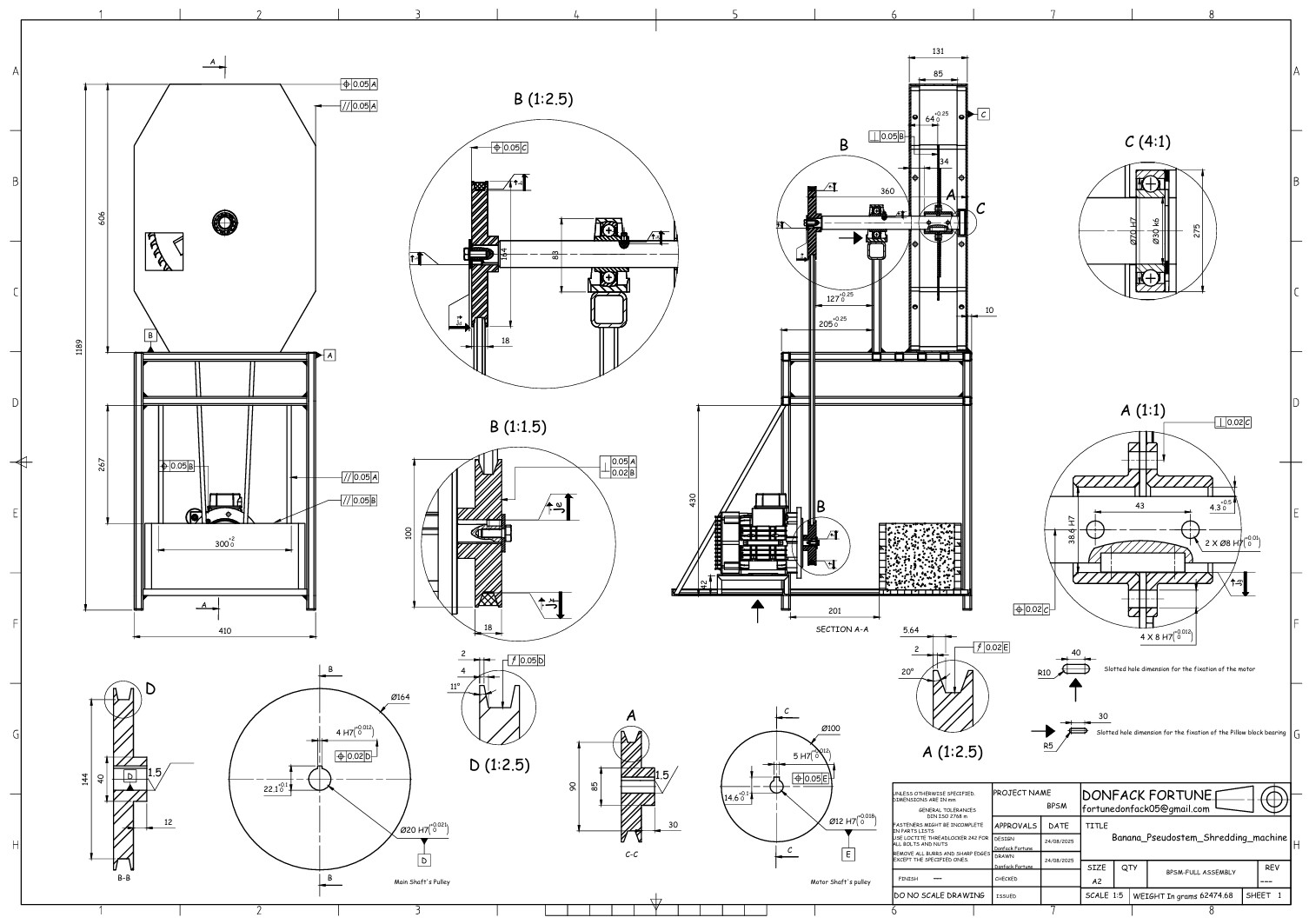
Full A2 technical drawing of the banana pseudostem shredding machine with component dimensions and assembly details

Interested in this type of work?

I'm available for sustainable machinery design, agricultural engineering consulting, and research supervision.